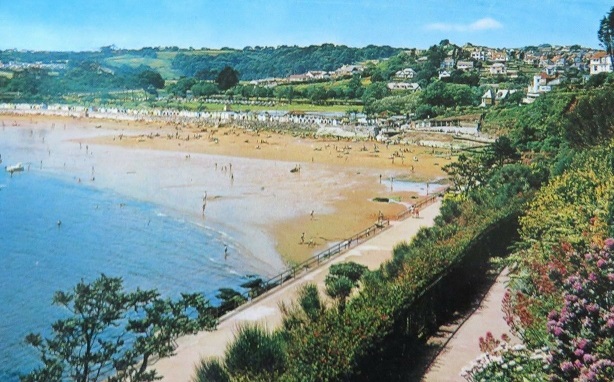
Goodrington Sands in the 1970s
During the summers of the late 1970s Mum, Dad, and I made an annual pilgrimage to Paignton in South Devon. We even returned to the same hotel. Maybe it’s a case of nostalgically looking back through childhood rose-coloured spectacles but it was a time when I felt happy, even though the pleasures were often simple. COVID-19 might ultimately scupper a planned return to Devon for the Pointon family at the end of this month, but I thought I’d blog about those childhood memories.
In the summer of 1976 I was a few months short of being 5 years old. Our family didn’t have a car, and as Dad worked on the railways we got free travel on British Rail. Therefore the journey to our holiday was made by train, and this became a fundamental part of the childhood adventure for our visits to Devon in the late 1970s. This was the era of the “BR Blue diesel” locos and corridor coaches with separate compartments for 6 to 8 people. The first few holidays involved taking an hour long slow stopping train, nicknamed “chunder wagons” by railway workers, from Stoke to Birmingham New Street. I remember being rudely awakened about 4:30 am so we could be at Stoke station for that 06:10 service to Birmingham. At Birmingham we’d pick up a cross-country service to Paignton, which most likely originated at Derby. In later years there was a through service from Manchester which stopped at Stoke. It was on the Paignton train when usually the fun started.
The journeys were never straightforward. In theory around lunchtime we should have been breathing in that wonderful sea air and listening to the calls of the seagulls. In theory. In practice an engine would typically fail somewhere between Bristol and Exeter. We’d then wait ages in the sweltering train for a replacement to arrive from somewhere like Taunton. Sometimes the replacement would fail. Arriving hours late was not unusual. Dad always claimed that Mum jinxed us because trains didn’t breakdown when he was on his own. One year we had reservations for coach H on the Paignton train. We walked down the New Street platform in search of it. Coach E, F, G, no H! Where was it? Evidently not on the train. A group of irate passengers gathered on the platform roughly where the missing coach should be, and some poor rail worker got a right earbashing. I recall my Mum wasn’t very pleased about it to say the least, mainly because it potentially meant a 4 and half hours journey standing up, and secondly because she was once again accused of being a jinx.
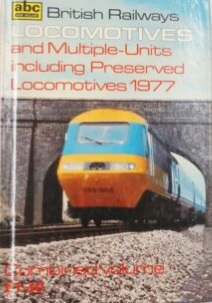
Something to keep me occupied on the journey
When the engine was performing as it should, and we were hurtling along to the tune of the clickety-clack of the rail joints, I remember being a bit of a fidget, unable to settle in the compartment. I’d slide back the compartment door to get into the corridor for a wander, and sometimes peer out of the open window of the coach door to see what was coming down the other line. This is if I could get past some of the unfortunate passengers having to stand in the corridor. In a bid to keep me occupied, my parents bought me the 1977 Ian Allan loco-spotting book, so that kept me good for a while, particularly as we passed bigger stations where other trains stood, or engines were idling in sidings. I also had one of The Famous Five or The Secret Seven books for good measure. At some point on the journey around normal breakfast time we’d tuck into jam or marmalade butties to “keep us going”, and there were other butties prepared for lunch at Paignton, or wherever the engine failed. Naturally my Mum also had made a flask of tea or coffee to swill it down.
The journey to Paignton involves passing through some wonderful scenery, none better than the stretch of line between Dawlish Warren and Teignmouth where the trains run alongside the beaches on one side and the red sandstone cliffs on the other. I always enjoyed this part because it was the first glimpse of the sea, and I knew we were close to our destination. The train cut back inland towards Newton Abbot, then went on through to Torquay, and finally into Paignton. If I could, I tried to spend the Torquay to Paignton part with my head out of the window, looking out as Paignton’s Preston Sands came into view, and hearing the warning siren from the level crossing as the train slowed into our destination. There would be a bustle of activity by those level crossing barriers, cars and holidaymakers waiting to get across into Torbay Road or the large Woolworths store on the corner, some people watching the train arrive from the footbridge next to the signal box.
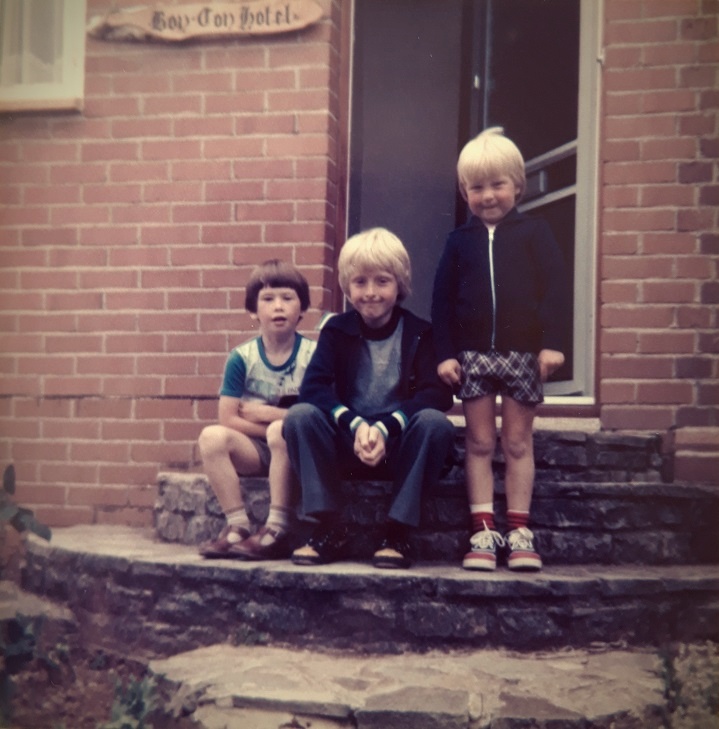
A young Andrew (left) at the Bon Ton
I think we took a taxi for the short trip from the station to our hotel because of the suitcases and it was a climb, but I’m sure we also walked it, possibly the return journey. The Bon Ton Hotel was a 10 room establishment offering breakfast and evening meals, situated on St Andrew’s Road, and conveniently placed for Goodrington Sands. I’m told that our first stay there was due to a strange twist of fate. Initially we had meant to be holidaying in our neighbours’ static caravan at Prestatyn in North Wales but it had been double-booked. Mum therefore looked through a brochure for Devon, spotted the Bon Ton Hotel’s address and gave them a call. By chance there was a cancellation and so we got in. By coincidence the proprietors, Derek and Barbara, were also originally from Newcastle Under Lyme.
Derek and Barbara clearly were doing something right as we kept returning, until one year “Derek put his prices up”, and we ended up in a Grange Court Holiday Park caravan instead. But even that year we still visited one evening for the 1970s classic of chicken and chips in a basket. I loved the Bon Ton. The breakfast of cornflakes, full English, and rounds of marmalade on toast everyday seemed like a luxury. In the evenings I used to like to sit on a stool at the bar supping away at a Coke in a glass bottle talking to Derek. Another couple, Ann and Fred from Manchester, were also regular guests when we were there, and they had two sons of a similar age to me so I had some holiday friends too. I remember being there in 1978 when the women all went out and left the men to watch the World Cup Final on the television in the hotel lounge. That was not a happy room full of blokes because we all wanted Holland to win. At some point I got bored of it and the young uns had their own kick about in the front garden.
The main highlight, and indeed my main love of Paignton was Goodrington. It was a short walk down the hill from the hotel to Goodrington Park, although it always felt like a long and hard traipse back after a day of play on the beach. The park had a boating lake, and either side of the low wall that separated the park from the promenade were white bathing huts with colourful doors and bargeboards. Simple things would keep me amused like running along that wall between the huts, probably pretending to be a train! That was at the North Sands, where there was also a kiosk, and I remember Dad waking me up early so we could walk down to it to buy a newspaper before breakfast. I wasn’t impressed to be woken at such an hour, but when I got out there, I did enjoy the time spent with Dad collecting the paper and having a “blow of the sea air son”. I liked Goodrington North Sands. There was plenty of opportunity to put my specially purchased bucket and spade to good use, and to take to the sea in an inflatable boat. But the greatest part of Goodrington was the South Sands. Now there was a special place.
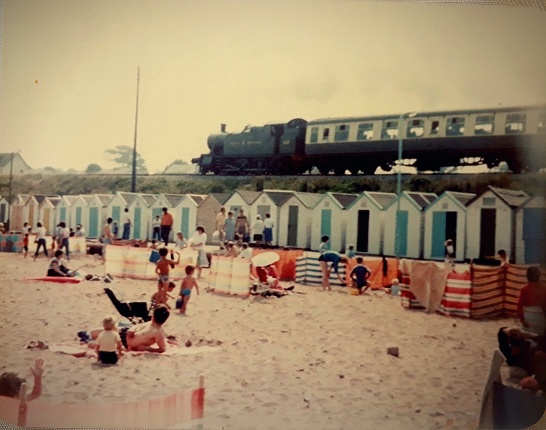
Ex GWR 2-8-0 tank engine “Goliath” passes Goodrington South Sands
South Sands obviously had the same sandcastle building, sea fun, and strawberry ice cream as its northern neighbour. However it had a trump card – a heritage steam railway running alongside it. At regular intervals my sandcastle endeavours, and the constant hum of the generator at the nearby waterpark, were interrupted by the distinctive shrill whistle of a former Great Western Railway (GWR) engine. The whistle would be followed by the echoing bark of the engine’s exhaust from its copper topped smokebox chimney as it pulled away from Goodrington Sands station. The beat of its bark slowly increased as it gathered momentum. The train would then emerge on an embankment behind a row of beach huts, and loudly labour its way up a heavy incline in the direction of Churston, eventually disappearing into a cutting in the cliffs. This experience was totally awesome as a young boy, and it was the beginning of a life-long love of railways, steam engines, and in particular the GWR.
Number 7827 Lydham Manor was my favourite engine, and had been rescued from Dai Woodhams’ famous scrapyard in Barry in 1970. In the late 1970s it looked absolutely resplendent in 1930s GWR green livery, (which it would have never worn in service having being built in 1950 after nationalisation), pulling a rake of coaches in GWR “chocolate and cream”. The railway also had a large GWR 2-8-0 tank engine, more used to pulling heavy coal trains through the Welsh valleys in its heyday, which they named Goliath, something the purists would object to, but a young boy didn’t mind at all. Finally there was number 4555, a GWR 4500 class Small Prairie 2-6-2 tank engine which I was particularly fond of.
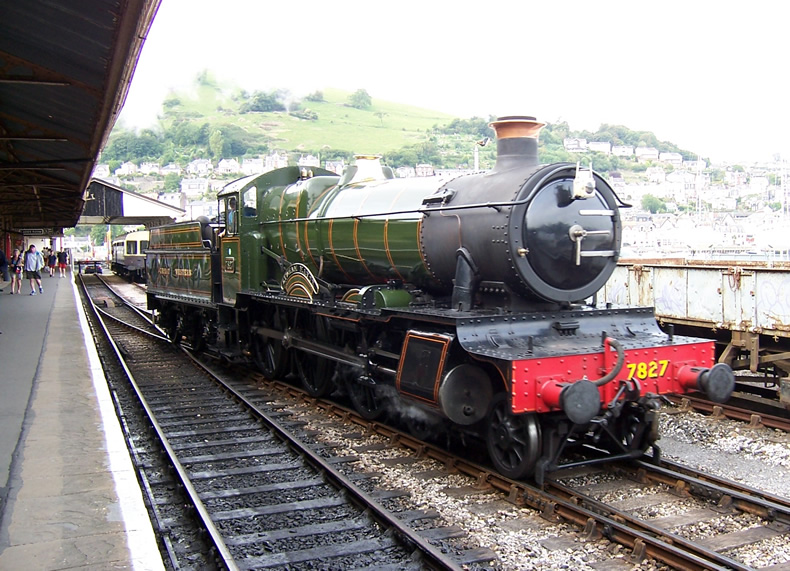
7827 Lydham Manor at Kingswear in 2007 looking how I remembered it as a child
As a family we travelled on the Paignton and Dartmouth Steam Railway, as it was known then, a few times, probably nearly every year we visited the area. The line is very picturesque, and as well as running next to Goodrington Sands, there are great views of Broadsands as the train passes over Broadsands Viaduct and Hookhills Viaduct, before eventually running alongside the River Dart, passing Dartmouth Harbour and then terminating at Kingswear. As much as I enjoyed riding on the railway I was just as happy to watch trains pass by as I played on the beach. During later holidays when I was a little older, on hearing the distant whistle, I’d run off the beach and up a path behind the waterpark slides to a gate that led directly on to Goodrington Sands platform. I’d watch the train arrive and depart, then get back to whatever I was doing on the beach. On more recent visits I was disappointed to find that gate was no longer accessible, and Lydham Manor was painted (more accurately it has to be said) in 1950s British Railways black with red linings.
There were other things about holidays in Paignton that I recall fondly. On Torbay Road, which led from Paignton station to the esplanade, there were two establishments which have special memories. The first was the Igloo ice cream parlour, with white textured decor to give the impression (badly) of walking through an ice cavern. The Igloo was home to its famous knickerbocker glories (for those who don’t know, a layered ice cream sundae that is served in a large tall conical glass and eaten with a long spoon!) To be honest it was probably a bit tacky, but for a young lad it was a highlight of the holiday, and I think typically an evening treat. Also on Torbay Road was a post office that sold toys. The pocket money I’d been given for holiday spends was frugally saved until our last day when I could visit the shop and swoop for something I’d had my eye on for the week. I think we even went in there en route to the station. There were disappointments mind, like the toy airport fire and rescue truck that was no longer in the shop window on our day of departure.
We’d also have our trips out. I recall visiting the model village at Babbacombe which of course had a model railway. This excursion would also usually involve a wander around Cockington, a village of quaint thatched cottages, with a working forge, waterwheel, and medieval church. One year my Dad hired a car whilst we were away. I excitedly speculated with my Bon Ton friends about what he’d return with, hoping it was a Rover, because I was obsessed with the Rover P6 and SD1 cars, probably due to watching too many 1970s police dramas on television. I was pretty disappointed and embarrassed when Dad rolled up with a tiny Fiat 127. This Fiat would forever be remembered for trundling into the back of another car as we descended the road to Brixham harbourside. Luckily for Dad I don’t think the hire company noticed or were unduly bothered about the dent in the front bumper.
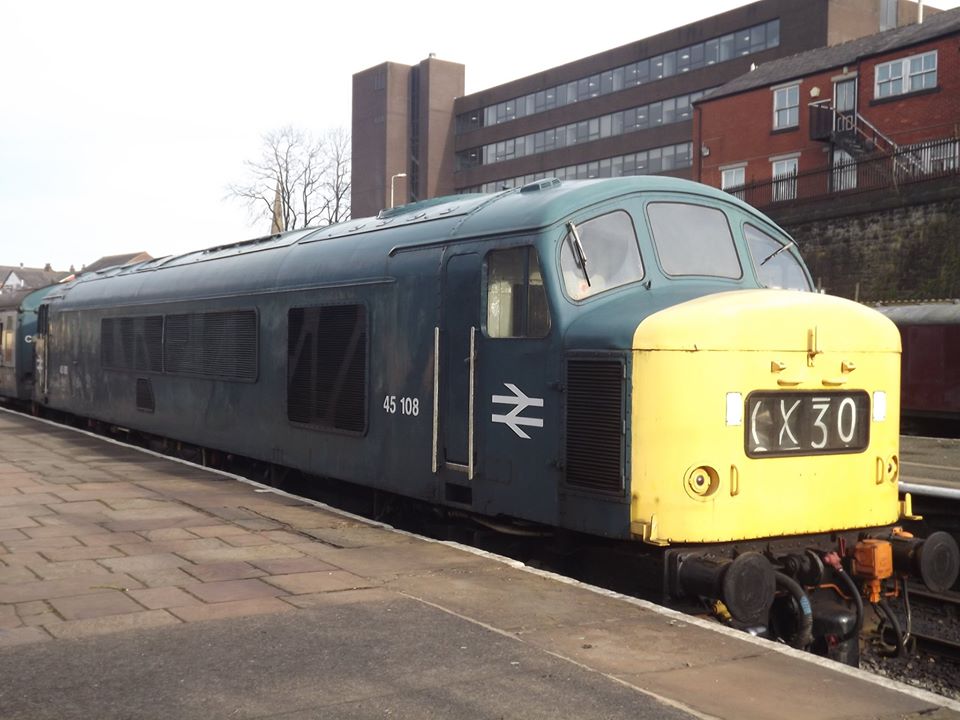
Preserved Class 45 loco at the East Lancs Railway in 1970s livery (Feb 2018)
All good things come to an end, and the holiday would be over far too quickly for my liking. The return home was always a sad affair. Typically a Class 45, 46, or 47 loco would be waiting in the station in charge of the 10:15 Paignton to Manchester Piccadilly service that stopped at Stoke. With a toot of the two-tone horn and a plume of exhaust fumes, the engine accelerated away, over the level crossing, past Woolworths, under the footbridge, carrying us away for another year. One final look out longingly at Preston Sands and then I sit back to endure the five hours journey back to the Potteries. I remember that the carriage sidings at Goodrington were often full of rakes of coaches, lined up especially for the holiday trains. Now with the benefit of the internet it’s possible to discover that for one particular Saturday in August 1976, as well as our train to Manchester there were morning trains in quick succession to Sheffield, Derby, Nottingham, Liverpool, Leeds and Hull, and Bradford to name but a few examples, taking the holidaymakers back to industrial heartlands. These trains continued throughout the day, with three heading to Manchester Piccadilly. This era on the railways is often much maligned with its grubby aging coaches, (Mum complained of the dusty seats), failing locos, and dreadful catering. But for me the “BR Blue diesel” era was a golden age because of the sentimentality I have for those holidays in Devon, and the part the railways played in those memories.
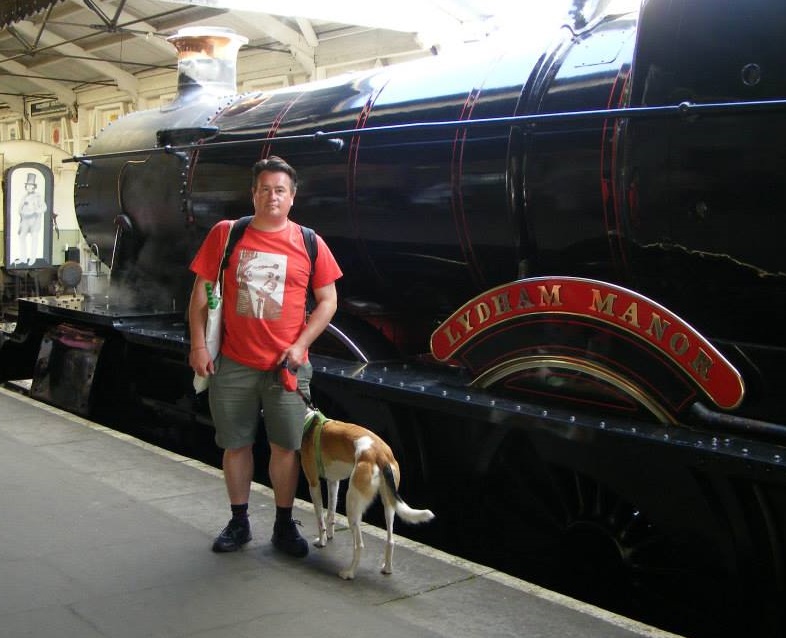
7827 Lydham Manor at Kingswear in British Railways black livery 2013
Summer of 1979 was the last of those family holidays in Paignton, this time in the caravan, and 1980 saw a treacherous switch to the Isle of Wight. (That also involved travels by train and a ferry, so not all bad!) I didn’t return to Paignton for 28 years. I was staying with a friend in Exeter in 2007 for some walking in Exmoor and Dartmoor national parks, when I decided to take a detour to Paignton on my way back to Leeds. I parked my car by Paignton station, caught a steam train to Churston, and then walked back along the South West Coastal Path. I had to walk along the promenade at Goodrington, passing South and North Sands, and through the park. It all seemed so much smaller than what I remembered. I walked from the park up the hill that is Braeside Road, round the corner into St Andrew’s Road to seek out the Bon Ton Hotel. I have to say the walk didn’t feel as long or as tiring as I recall as a child. But sure enough there, now called Birchwood House and painted pink, stood my favourite childhood holiday home. It was a poignant moment. I walked down St Andrew’s Road in the direction of the station and ended up on Torbay Road. Sadly the Igloo was no more, nor could I see the post office with toys, and the street had a run down tacky feel to it. In a way I regretted going back and having those happy childhood memories tarnished.
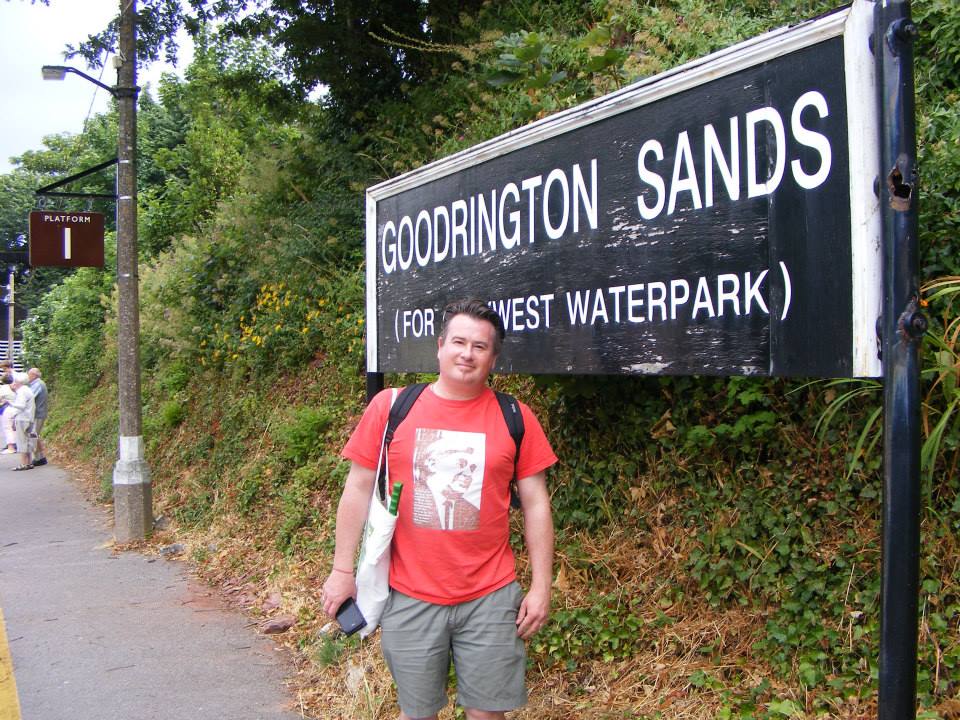
Back at Goodrington Sands station 2013
However I’ve returned two more times since then. In 2013 Tina and I took my stepson Landon, who was 13 at the time, and our two dogs on holiday to Devon, staying at a holiday park in Brixham. On one of the days we visited Goodrington, taking a trip to Kingswear and back on the steam railway, then spending the rest of the day on Goodrington Sands, and Landon also had fun in the waterpark. I wanted Landon to have a similar childhood experience of Goodrington as I did, albeit he was older than I would have been. Tina and I next visited Paignton in July 2019, this time with my parents. We booked a few days away just down the coast at Teignmouth to celebrate Dad’s 80th birthday, and it was only natural to return to our old haunts. One day we all took a trip on the steam railway, with Mum and Dad continuing on to Kingswear and back, whilst Tina and I got off at Churston with Bevan, and walked along the South West Coastal Path to Goodrington. We all met up again, and before heading back to the car we made a pilgrimage to the Bon Ton Hotel. It was the first time my parents and I had been there together in exactly 40 years. Things had gone full circle with it now being me taking them to Paignton.
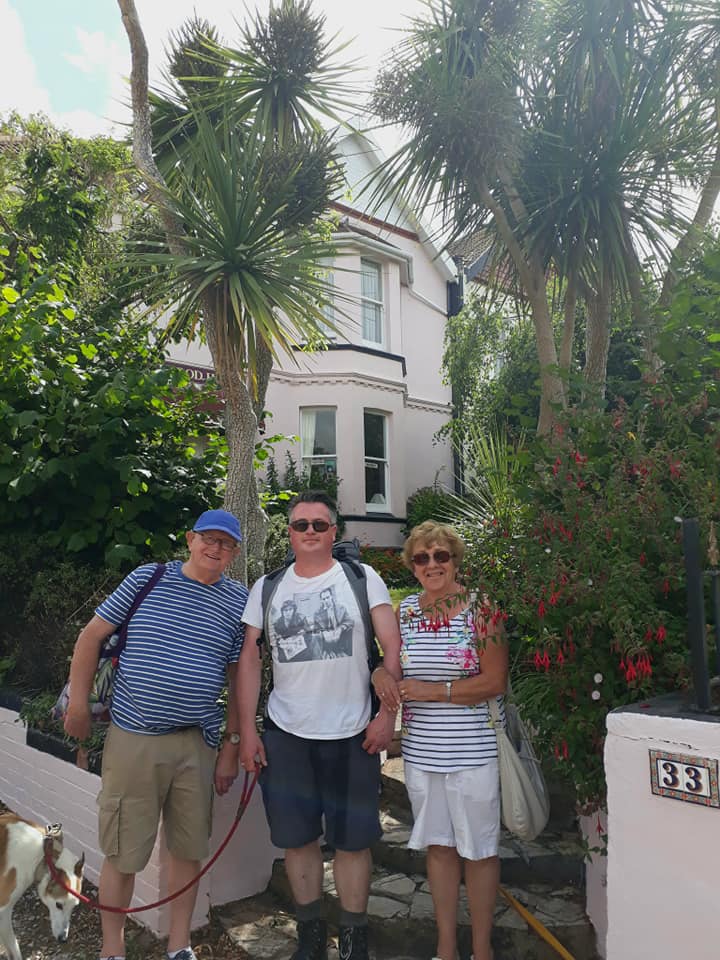
The Pointons return to Bon Ton Hotel in July 2019
This year we had booked a few days in late March and early April in Teignmouth to celebrate my Mum’s birthday. No doubt we’d have made another trip to Paignton and Goodrington for old times’ sake. But COVID-19 came along and the hotel was forced to close. However our booking was moved to late July so a return is possible. But it is doubtful my parents will come along as the advice for the over 70s is still to remain at home as much as possible, and the general advice is not to use public transport unless completely necessary. They understandably don’t fancy the risk, or several hours on a train wearing a mask. With 40+% of positive COVID-19 cases being asymptomatic, Tina and I could possibly even pass it on to them unwittingly.
The key part of those childhood memories was the spending of quality time with my parents, and them making all of these wonderful times possible. My Dad worked shifts on the railways and I remember having to “keep it down because Dad’s in bed” when he’d been on nights. So it was a novelty to have him around for several full days on the trot, and a bonus that it was in such a fun place. We made happy memories there as a family and I hope we can continue to do so in the future. One day I would like to actually stay at what was the Bon Ton Hotel, but they don’t allow dogs and I think it’s a bit pricey. Some things don’t change. Also I’d love one day to make the journey to Paignton by train, but without a British Rail free pass the fares from Leeds are rather eye watering. Plus it wouldn’t be the same without a grimy blue Class 45 loco with a train of dusty corridor coaches transporting me there. The good old days!
More photos
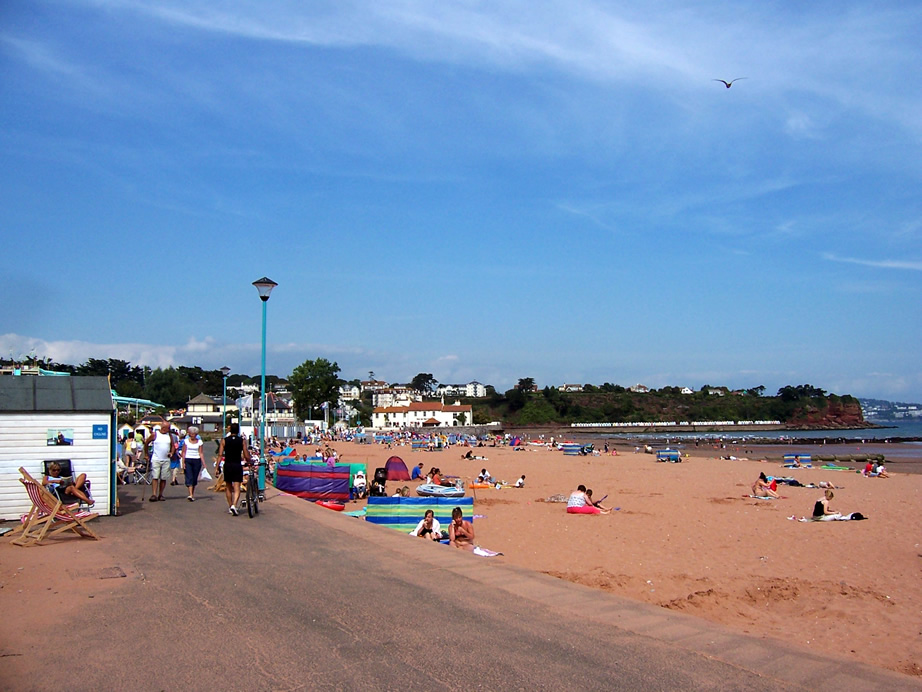
Goodrington South Sands 2007
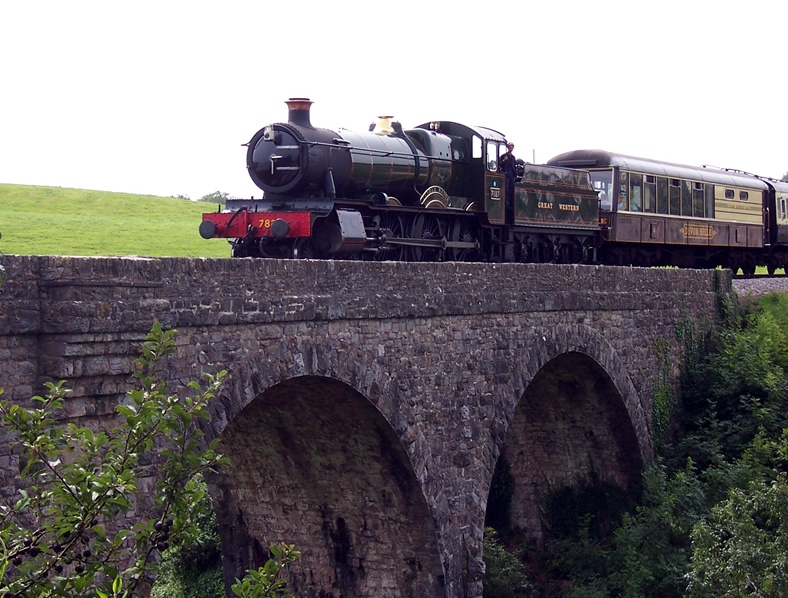
Lydham Manor at Broadsands 2007
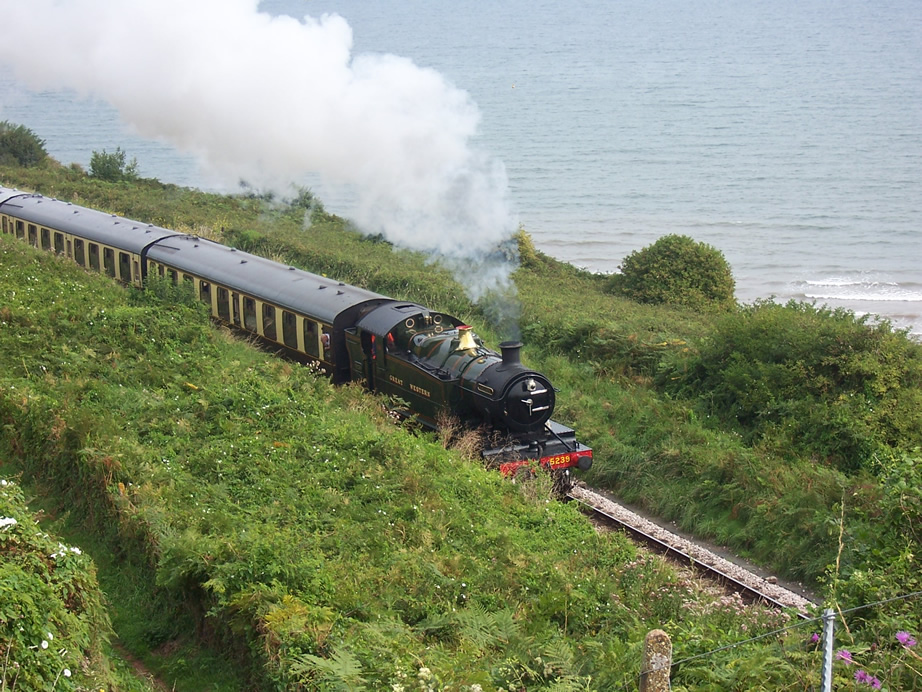
5239 “Goliath” in 2007
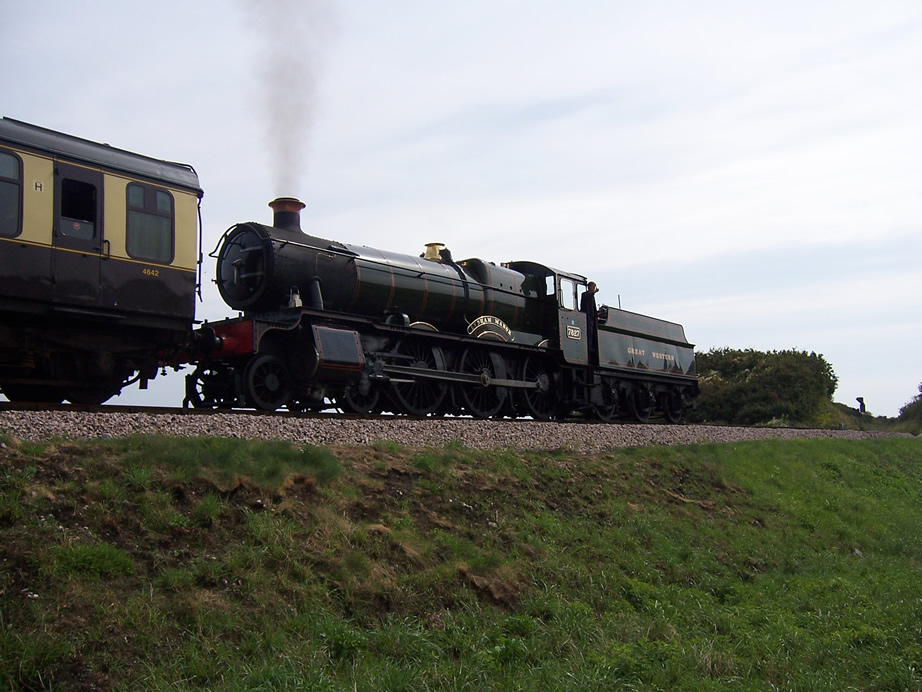
Lydham Manor at Goodrington in 2007
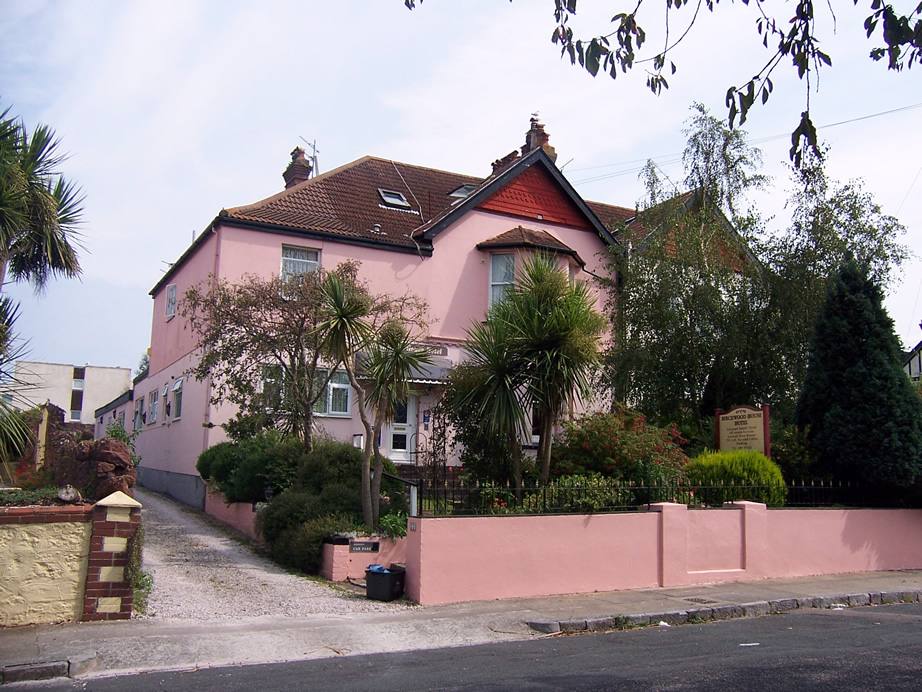
The “Bon Ton” in 2007
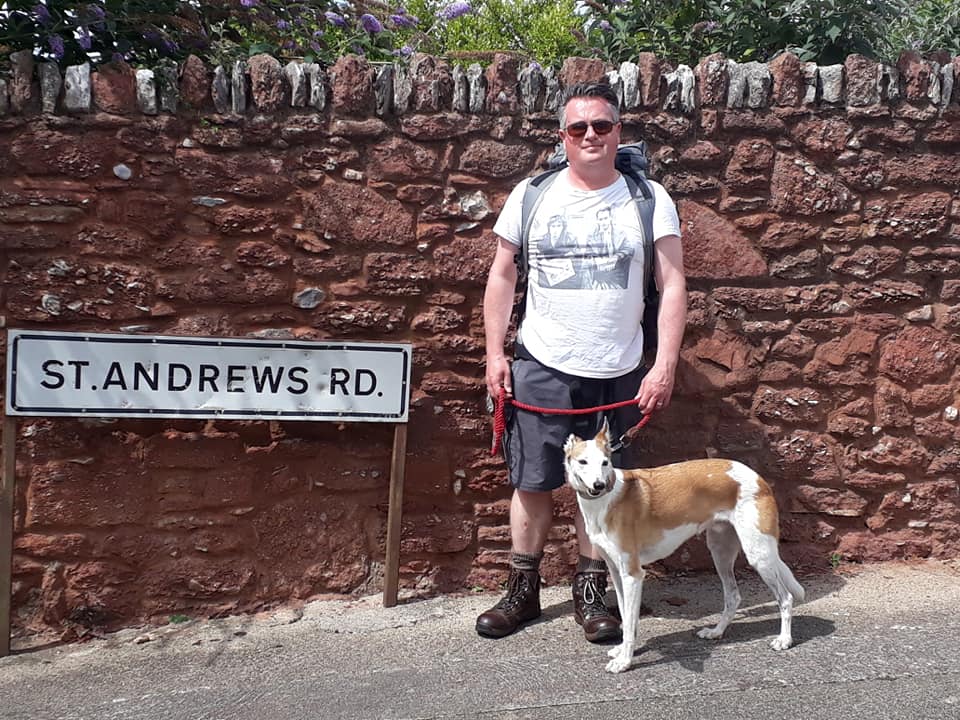
Andrew and Bevan in July 2019